Saturday, August 27, 2011

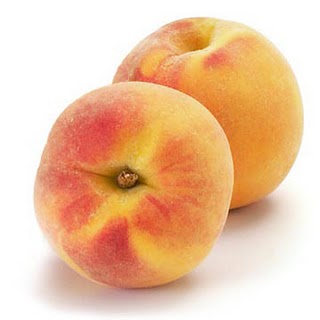
How to Freeze Peaches

Today is a good day. Today is the day I am going to help out my dad and freeze Red Haven peaches. They are our favorite tasting peach--and it started in Michigan! Here's a brief history. The Red Haven was introduced in 1940. It was created by Dr. Stanley Johnston of Michigan State University. It was first grown in South Haven, Michigan. There is a park in South Haven that bears Stanley’s name. His “Haven” series of peaches had a major effect on the peach business in the eastern part of the country.

Today is special. I might just eat a fresh peach (or two?) before the rest go into freezer bags. Yum! Next I anticipate taking a bag of peaches out of the freezer when Michigan fresh fruit is a thing of the past--February in Michigan--and savor a little taste of late summer peaches. Oh yeah!

The following article is from another blog post that gives great instructions as to freezing peaches.

***

Freezing Fresh Peaches

It is a pretty simple thing to put up fruit in the freezer. You save some money and have the taste of summer all year long. We used to can peaches, then we progressed to freezing them in syrup and finally over the year we perfected this really simple way to freeze peaches.

The most important thing to do is to start with a good peach. They should be freestone peaches and be ripe, but not soft. They should also have a skin that peels easily without having to blanch the fruit. The peaches we get are Red Haven peaches. This is the variety that we like to use for freezing and it always produces a great result.

The most labor intensive part of the process is the peeling and slicing. I make a slice around the seam of the peach and pull the skin off starting with the peach. If the peach is of proper ripeness the skin should pull off without having to cut off any of the flesh. After peeling, I cut slices off the stone. Next you need to treat the peaches with Ascorbic Acid so they don't go brown. I use Fruit Fresh, but I don't follow the proportions on the label as they use too much sugar in my opinion. Finally you need to pack you fruit in sugar.

Recipe for Freezing Fresh Peaches

8 quarts of skinned and sliced fresh ripe peaches
8 quart freezer bags
8 T Fruit Fresh
4 C sugar

Divide the peaches among the bags making sure to leave some head room. Mix 1 T of fruit fresh and 1/2 of sugar into each bag. Stir the fruit and sugar mixture in the bag. Allow to sit for 15 minute or so until some juice forms. Seal bags and place them in the freezer.

I love to eat these peaches all by themselves or over vanilla ice cream. You can also use a quart for the filling for a pie or a peach cobbler.

Enjoy!

[Taken from http://househubbie.blogspot.com/2008/08/how-to-freeze-fresh-peaches.html]
***

I would love to read your favorite peach recipe.
Please leave me a comment.
Now that would just be peachy!

Thursday, August 25, 2011

The best six doctors anywhere


The best six doctors anywhere
And no one can deny it
Are sunshine, water,
rest
, and air
Exercise and diet.


These six will gladly you attend
If only you are willing
Your mind they'll ease
Your will they'll mend
And charge you not a shilling.


~Nursery rhyme quoted by Wayne Fields, What the River Knows, 1990

Saturday, May 28, 2011

The Meaning of Memorial Day

The following was shared by Tom DeVries, Lead Pastor of Fair Haven Ministries in Hudsonville, MI. He received it from his friend, Mike Atkinson.

As we move toward Memorial Weekend, and look to think, thank, and remember veterans this weekend, Tom shares a story from Mike (the father of a Marine), which I believe will touch your heart and help you reflect on what Monday means to us as Americans. It may be a little long, but worth the read. I'm sure there are some that roll their eyes about this holiday, others that find meaning only as the official start of summer, but for others the meaning of this day is special, and even more, personal.

As you reflect on Memorial Day, may you be reminded that for all, God has truly shed His grace on thee.


CEMETERY WATCHMAN

I just wanted to get the day over with and go down to Smokey's. Sneaking a look at my watch I saw the time - 1655. Five minutes to go before the cemetery gates are closed for the day. Full dress was hot in the August sun. Oklahoma summertime was as bad as ever - the heat and humidity at the same level - both too high.

I saw the car pull into the drive - a '69 or '70 model Cadillac Deville, looked factory-new. It pulled into the parking lot at a snail's pace. An old woman got out so slowly I thought she was paralyzed; she had a cane and a sheaf of flowers - about four or five bunches as best I could tell.

I couldn't help myself. The thought came unwanted, and left a slightly bitter taste: 'She's gonna spend an hour, and for this old Marine, my hip hurts and I'm ready to get out of here right now!' But for this day, my duty was to assist anyone coming in.

Kevin would lock the In gate and if I could hurry the old biddy along, we might make it to Smokey's in time.

I broke post attention. My hip made gritty noises when I took the first step and the pain went up a notch. I must have made a real military sight: middle-aged man with a small pot gut and half a limp, in Marine full-dress uniform, which had lost its razor crease about thirty minutes after I began the watch at the cemetery.

I stopped in front of her, halfway up the walk. She looked up at me with an old woman's squint.

"Ma'am, may I assist you in any way?"

She took long enough to answer.

"Yes, son. Can you please carry these flowers? I seem to be moving a tad slow these days."

"My pleasure, ma'am." Well, it wasn't TOO much of a lie.

She looked again. "Marine, where were you stationed?"

"Vietnam, ma'am. Ground-pounder. '69 to '71."

She looked at me closer. "Wounded in action, I see. Well done, Marine. I'll be as quick as I can."

I lied a little bigger: "No hurry, ma'am."

She smiled and winked at me. "Son, I'm 85-years-old and I can tell a lie from a long way off. Let's get this done. Might be the last time I can do this. My name's Joanne Wieserman, and I've a few Marines I'd like to see one more time."

"Yes, ma 'am. At your service."

She headed for the World War I section, stopping at a stone. She picked one of the flowers out of my arm and laid it on top of the stone. She murmured something I couldn't quite make out. The name on the marble was Donald S. Davidson, USMC: France 1918.

She turned away and made a straight line for the World War II section, stopping at one stone. I saw a tear slowly tracking its way down her cheek. She put a bunch on a stone; the name was Stephen X. Davidson, USMC, 1943.

She went up the row a ways and laid another bunch on a stone, Stanley J. Wieserman, USMC, 1944.

She paused for a second. "Two more, son, and we'll be done."

I almost didn't say anything, but, "Yes, ma'am. Take your time."

She looked confused. "Where's the Vietnam section, son? I seem to have lost my way."

I pointed with my chin. "That way, ma'am."

"Oh!", she chuckled quietly. "Son, me and old age ain't too friendly."

She headed down the walk I'd pointed at. She stopped at a couple of stones before she found the ones she wanted. She placed a bunch on Larry Wieserman, USMC, 1968, and the last on Darrel Wieserman, USMC, 1970. She stood there and murmured a few words I still couldn't make out.

"OK, son, I'm finished. Get me back to my car and you can go home."

"Yes, ma'am. If I may ask, were those your kinfolk?"

She paused. "Yes, Donald Davidson was my father, Stephen was my uncle, Stanley was my husband, Larry and Darrel were our sons. All killed in action. All Marines."

She stopped. Whether she had finished, or couldn't finish, I don't know. She made her way to her car, slowly and painfully.

I waited for a polite distance to come between us and then double-timed it over to Kevin, waiting by the car.

"Get to the Out gate quick! I have something I've got to do."

Kevin started to say something, but saw the look I gave him. He broke the rules to get us there down the service road. We beat her. She hadn't made it around the rotunda yet.

"Kevin, stand at attention next to the gatepost. Follow my lead." I humped it across the drive to the other post.

When the Cadillac came puttering around from the hedges and began the short straight traverse to the gate, I called in my best gunny's voice: "TehenHut! Present haaaarms!"

I have to hand it to Kevin; he never blinked an eye - full dress attention and a salute that would make his Drill Instructor proud.

She drove through that gate with two old, worn-out Marines giving her a send-off she deserved, for service rendered to her country, and for knowing duty, honor and sacrifice.

I am not sure, but I think I saw a salute returned from that Cadillac.

[forwarded by Ken Davis, the proud son of a war hero]

Monday, May 23, 2011

Spring Cleaning Tips: 10 Simple Steps for a Greener and Healthier Home

Spring and "springtime" refer to the season between Winter and Summer, and broadly to ideas of rebirth, renewal and regrowth. We are now fully experiencing the Spring season--flowers and trees are blooming, and some of us are opening their windows for the first time in months. Many in northern climates experience Spring Cleaning this time of year--cleaning a house from top to bottom in the first warm Spring days of the year. This can be a daunting task for some of us but I found a book that really helps break it down into easy steps--and they are healthy, too!


A few years ago, Sloan Barnett came out with a book that cuts through the complexity of getting clean and green in our homes. Below is an excerpt that is worth repeating.
For more info on Sloan's book, please refer to
http://greengoeswitheverything.com/about.html


Sloan's 10 Simple Steps for a Greener and Healthier Home:
  1. Start by replacing a bunch of your cleaners (your general spray cleaner, glass cleaner, counter top cleaner, floor and bathroom cleaners) with a natural, nontoxic all-purpose cleaner. You will only need one to do that. Really!
  2. Replace your laundry detergent with a natural nontoxic one so the clothes you wear and the sheets you sleep on have no fumes for you to breathe.
  3. Go to your bathroom and read the shampoo, makeup and moisturizer labels. Ask yourself, “Do I really need scent in these products?” Take stock of all of your other products and try to replace one a week with a safer, greener choice.
  4. Use BPA-free plastic baby bottles and fill them with breast milk or organic formula. Choose powdered formula over canned formula to avoid BPA leaching from the can-lining.
  5. Pay attention (without freaking out) to the toys you buy for your kids. Avoid lead paint and soft plastics that contain phthalates.
  6. Shop the perimeter of the grocery store and avoid processed food. Even better, choose organic and locally grown meats, dairy, fruits, and vegetables.
  7. Try to get the plastic containers out of your kitchen and replace them with glass containers.
  8. Make a vow to stop buying bottled water—NOW. Instead, buy a water filter pitcher and keep two in your fridge at all times.
  9. For cleaner and healthier air, open your windows once a day when the outside temperature is comfortable.
  10. When buying new stuff for your home, focus on green products especially mattresses and carpets. 
Want to learn more about how your household products may be contributing toward your "Body Burden" with the amount of harmful chemicals and pollutants you have in your blood? Start below with the Body Burden Quiz:

http://greengoeswitheverything.com/quiz.html


Want to know more about Green, Safe, Powerful cleaning products that Always Work? Let me know and I'll share some Clean Fun facts with you.
~Cheryl

Saturday, May 14, 2011

FIBER

Would you agree that most people today do not get enough fiber in their diets?

Need to increase your FIBER intake?
  • Get your fiber from a variety of sources
    • Bran, oatmeal, beans, fruits, berries, raw vegetables & whole grains
  • Eat lots of fresh fruits & vegetables
    • At least 2 servings of fruit & 3 servings of vegetables each day
  • Use legumes in your meals
    • Aim for several times per week
  • Use bran cereal or add it to your foods
    • Cereals, Salads & Yogurt; Be sure to store bran in the refrigerator
  • Use 100% whole grains & brown rice
    • Read the label, many restaurants will substitute.
  • Add berries, nuts & dried fruits to your foods
    • Cereal & Salads—be creative
  • Use real foods rather than purified fiber
  • Increase your fiber intake slowly

Wednesday, May 11, 2011

Friday, April 22, 2011

Making YOUR home healthier this Earth Day

[Please read all the way to the bottom for a special TODAY-ONLY offer]

Let's team up and make 50,000 homes healthier this Earth Day!

For a limited time, starting this Earth Day 2011,  at the time you join Shaklee, you have an opportunity to make your home healthier by purchasing a very special selection of Get Clean products that includes:


___Basic H2 (16oz)

___Two Spray Bottles

___Get Clean Super Microfiber
       Cleaning Cloths

___Get Clean Dish Wash
       Liquid Concentrate (32 oz)

___Shaklee Energy (chews)

Only available at the time of sponsoring at
an incredible MEMBER PRICE of $30.*


* This purchase can also qualify you for our Join Free with $30 promotion!
See below for details.


Through May 20, 2011, purchase any Shaklee products with a minimum total purchase price of $30, and we’ll waive the $19.95 Shaklee membership fee!

This is the best “Join Shaklee” promotion ever offered! As a Shaklee Member, you will get ...
*       15% discount (off retail prices) on product purchases
*       Special promotions, offers and discounts
*       Unconditional money-back guarantee
*       Access to MyShaklee.com, Shaklee’s center for health and wellness news and information from Shaklee’s Health Sciences Team, and product experts


* Join through my affiliate site (link above) and get additional member bonuses from me.
    Click on the CONTACT ME button if you need help. I will help you place your order.

    * TODAY ONLY (4/22/2011) The first 5 people to join Shaklee and order through my
       affiliate link will receive a copy of Sloan Barnett's book,
Green goes with Everything.

Tuesday, April 05, 2011

It's Never Too Late to Communicate

 It's Never Too Late to Communicate

 
Always be the first to forgive and say "I'm sorry." Don't wait for fear of what the response might be. Remember Parkinson's latest law: "The vacuum created by a failure to communicate will quickly be filled with rumor, misrepresentation, doubt and poison."


In the communication process, knowledge is not always wisdom; sensitivity is not always accuracy and sympathy is not always understanding. Empathy is never assuming anything until you have "walked a mile in the other person's moccasins." Take full responsibility for success in the communication process. As a listener, take full responsibility for hearing the meaning behind what the others are trying to say. As a talker, take full responsibility for being certain that they understand what you are saying. Never meet anyone halfway in your relationships. Always give 100 percent.


This week make the call or have the conversation you have been putting off or dreading.


Denis Waitley


Reproduced with permission from the Denis Waitley Newsletter.


To Subscribe to Denis Waitley's Newsletter Use this link


© 2011 Denis Waitley International. All rights reserved worldwide.


All contents Copyright 2011 Denis Waitley International except where indicated otherwise. All rights reserved worldwide. **Duplication or reprints only with express permission or approved Credits (see above). All trademarks are the property of their respective owners


****
The above is from Denis Waitley's Newsletter and it spoke to me this week.

It is my hope it speaks to you as well.
Healthy Blessings,
Cheryl

Tuesday, February 15, 2011

Should We Just Take a Vivix Chaser With Our Next Fast Food Meal?

THOUGHTS FROM THE PROFESSOR...
About a completely independent study of a patented blend of resveratrol and muscadine grape polyphenols
(You may know it as Shaklee Vivix). This study was conducted by
Dr. Paresh Dandona and his colleagues at the State University of New York at Buffalo and
published in the Journal of Clinical Endocrinology.


***************************************

I subscribe to online health tips from Dr Chaney.
I want to share his most recent post with you as
I believe we need to be as informed as possible
when making decisions regarding our health.

Healthy Blessings,
Cheryl.


***************************************

Shaklee leads the industry in clinical trials that
prove their products work. Shaklee has funded over 100

clinical studies - more than the next 5 companies in
our industry put together.


But Shaklee isn't resting on their laurels. They
continue doing clinical studies and their studies
continue to be published in peer-reviewed scientific
journals.


In fact last week was an outstanding week for Shaklee.


Two of their studies were published in the same week!


But, I'm not going to talk about both studies in
today's column.


This week I'm going to focus on the study with
Shaklee's patented blend of resveratrol and muscadine
grape polyphenols (You know it as Vivix).


This was a completely independent study conducted by
Dr. Paresh Dandona and his colleagues at the State
University of New York at Buffalo and published in the
Journal of Clinical Endocrinology & Metabolism (H.
Ghanim et al, J. Clin. Endocrin. Metab.,
doi:10.1210/jc.2010-1812). It is currently available in
online form and will appear in print in May 2011.
(Here is the link to the study:
http://jcem.endojournals.org/cgi/content/abstract/jc.2010-1812v1)

The fact that it is an independent study is important.
That means that Shaklee didn't control the data. If
Vivix had turned out to be no better than placebo,
those would have been the results that would have been
published!


But, of course, Shaklee's Vivix did perform much better
than the placebo and therein lies the story.


In this study a group of young, healthy, normal-weight
adults were fed a typical fast food breakfast of egg
muffin and sausage muffin sandwiches and two servings
of hash browns.


That's a whopping 910 calories with 51 grams of fat
(1/3 of that saturated), 88 grams of carbohydrate and
34 grams of protein!


In a previous study (Ghanim et al, Diabetes Care, 32:
2281-2287, 2009) Dr. Dandona had shown that a fast food
meal like that turns on genes that cause a massive
increase in reactive oxygen species (ROS).


The increase in ROS then activates a number of genes
that trigger an inflammatory response - including two
genes, SOCS-3 and TLR-4, that are thought to interfere
with insulin signaling (which can lead to insulin
resistance) and damage to the walls that line the
arteries (As you might imagine, neither of those
responses is good).


And, if that weren't enough SOCS-3 also interferes with
the leptin signaling pathway. Simply put, interference
with the leptin signaling pathway means that your brain
doesn't realize that you just ate 910 calories. You
will probably want to eat more.


Now we do have a gene called Nrf-2 that is supposed to
be turned on when reactive oxygen species are detected.
It, in turn, activates a number of antioxidant genes
that will neutralize the reactive oxygen species and
protect our cells from oxidative damage.


In the cruelest blow of all the fast food meal turns
off Nrf-2 and all of the antioxidant genes that it
controls.

Are you sure that you still want to eat that fast food
meal?


With that as background, let's turn to the study that
was just published.


Dr. Dandona choose to use the fast food experimental
model because fast food meals give such a dramatic
response in such a short period of time that it is easy
test whether a given food or supplement can prevent
inflammation and oxidative damage.


Dr. Dandona simply gave one group Vivix and one group a
placebo 10 minutes before the fast food meal.


As you might suspect, the placebo did not alter any of
the bad effects of the fast food meal.


However, when Vivix was taken just prior to the fast
food meal:

- The genes that generate free radicals were not turned

on.


- The genes that trigger the inflammatory response were
not turned on.


- SOCS-3 and TLR-4 were not turned on

- Nrf-2 and the antioxidant genes it controls were
turned on.


In other words, Vivix completely reversed the short
term bad effects of the fast food meal.


So what is the take home lesson for you?


Does that mean that you should just take a Vivix chaser
with your next fast food meal?

Perhaps, but think how much good Vivix could do for you
if you ate a good diet!


Even if you don't eat fast food meals you should know
that oxidative damage, chronic inflammation and insulin
resistance have many causes. You don't need to eat a
fast food meal to generate that kind of metabolic
stress.


And it would be foolish to think that Vivix could undo
all of the bad effects of fast foods. Vivix simply
prevents that immediate effects of a fast food meal.


If you continue to eat fast foods on a regular basis
you will pack on the pounds, plug your arteries, raise
your blood pressure - the list goes on and on.


But, to me the most important conclusion from this
clinical study is that Vivix works.


It gets into your bloodstream and turns off the genes
that need to be turned off and turns on the genes that
need to be turned on.


If you look at the marketplace, you will find all sorts
of different potencies for resveratrol products, and
you will find resveratrol combined with many different
ingredients. And, of course, all of those companies
make fantastic claims for their products.


But, unless they have published a clinical study like
this one, they have no proof that their product
actually works.
To Your Health!
Dr. Stephen G Chaney

These statements have not been evaluated by the Food
and Drug Administration. This information is not
intended to diagnose, treat, cure or prevent any
disease.

* * *
If you are interested in reading more about Vivix, please check out this link: http://bit.ly/fSIUkb.

* * *

****ABOUT DR CHANEY:
Dr. Stephen Chaney, Phd


Dr. Chaney has a BS in Chemistry from Duke University and a PhD in Biochemistry from UCLA. He currently holds the rank of Professor at a major university.


Dr. Chaney has taught biochemistry to medical and dental students for more than 30 years and has won several awards for teaching excellence.


He runs an active cancer research program and has published over 100 scientific articles and reviews in peer-reviewed scientific journals. He has also written two chapters on nutrition for a popular medical biochemistry textbook.


Dr. Chaney and his wife have also built a business part time that has earned them a 6 -figure income for the past 15 years and he has spent the last 10 years teaching other people how to do the same.

Monday, January 24, 2011

What do Future Masters and Bird Feeders have in common?

I saw a lot of action at our bird feeder this morning. What a flurry! There were red cardinals, blue jays, finches, sparrows, chickadees—all kinds and shapes of birds. Some were pushy. Others were timid. It wasn’t easy for them to get to the feeder. There was heavy snow in the trees and it was very cold outside. Some traveled a long way to get there. There were other feeders they could have gone to but perhaps they came to our feeder because of the good quality black sunflower seeds.

It made me think how we humans are similar in nature. It made me think how important it is for us humans to feed ourselves. Sure physically, but also mentally. Why? Because we have to feed ourselves mentally in order to grow. If we quit doing that—if we stop connecting at a feeder or go to the wrong one--we diminish our ability for action. When we come together to feed our brains, we can dream. We can get energy and focus that we need for our activities. Then we can truly fly!

I attended a 3-day Future Masters conference last week. It wasn’t easy for me to get to this conference. I had some financial conflicts. I had to travel a long way from Michigan to get to California. I could have gone to an online conference or even just attended a few phone call conferences. But I came to this conference. Why? It is important to feed myself with the best quality content in order for me to get the energy and focus I need for my activities that will help my team as well as myself accomplish our goals this year. This conference gave me that. Corporate people and others in my field taught me that I can dream. They gave me productive tools for the activities I need to do when achieving my goals and for helping others in my organization achieve their goals. Now it is up to me when I leave the feeder as to what I do with these tools. I flew away armed with energy and focus for both personal and business goals. Wow! That was a good feeder!!


How is your energy and focus? Have you been to any good feeders lately?

Saturday, January 15, 2011

Drugs that make me go hmmmm

Do you take Aspirin for the headache
caused by the Zyrtec you take for the hayfever
you got from Relenza for the uneasy stomach
from the Ritalin you take for the short attention span
caused by the Scopederm Ts you take for the motion sickness you got
from the Lomotil you take for the diarrhea
caused by the Zenikal for the uncontrolled weight gain
from the Paxil you take for the anxiety
from Zocor you take for your high cholesterol
because
exercise,
a good diet,
and regular chiropractic care
are just too much trouble?

As seen on this t-shirt


hmmmmmm.

Monday, January 10, 2011

Monday's Eating Healthy & Losing Just 10

Today is weigh-in day (and NO, I am not posting my weight
out here today, however, I will post net pounds lost as well as
net inches lost--not even giving any consideration to any gains.)

Continuing the theme of Eating Healthy & Losing Just 10,
I am looking at tonight's fish dinner choices. Either:
Alaskan
Grayling
or
Halibut.

Below are two recipes that are worth checking into.
Hmmm, both sound good. Both fish are in our freezer.
~Cheryl


***Arctic Grayling

INGREDIENTS
(1) One whole grayling cleaned and dressed
(fins removed leave the head and skin)
2 tbsp chopped green pepper
2 tbsp chopped red pepper
2 tbsp chopped onion
2 thin slices of lime
1 tbsp butter
1 tsp tarragon
2 tbsp dark rum
seasoning salt and pepper to taste

DIRECTIONS
Coat the cavity of the fish with seasoning salt, pepper and tarragon.
Mix peppers and onion and stuff into cavity
Crumble butter into the cavity, finally adding the lime slices.
Take the stuffed fish and wrap with tinfoil.
Just prior to sealing pour the rum over the fish.

Cook on medium high BBQ for approx 7 min / side or until
cooked through. Be careful not to overcook as the bones will
pull away with the meat if overdone.

Once complete scrape skin away and using a fork tease the
meat away from the medial line in the fish. This should leave
all the bones attached to the skeleton
Bon Appetite!
(by Ken Davies of Alberta Canada)

Nutritional Information not available


***Halibut Kabob

INGREDIENTS
1 lb halibut steak, 1 inch thick
¼ C fresh lemon juice, juice of 1 lemon
¼ C olive oil
3 shallots, thinly sliced
1 t Italian herb seasoning
½ t dried thyme, crushed
½ large red onion, cut lengthwise into thirds

DIRECTIONS
Preheat broiler. Cut fish into 1 inch cubes and set aside.
In a bowl, mix lemon juice, oil, shallots, herb seasoning
and thyme. Add fish and toss to coat. Marinate in
refrigerator for at least 5 minutes, but no more than 1 hour.
Pry onion apart in single layers. Thread each skewer,
alternating with onion and fish, using four pieces of fish
and five pieces of onion. Place skewers on a broiler pan
and broil four inches from heat 2 to 2 ½ minutes on each
side or until fish is no longer translucent.

Makes 4 servings.
Calories: 295/serving

NUTRITIONAL INFORMATION PER SERVING:
30g protein
4g carbohydrates
17.5g fat
82mg sodium
48mg cholesterol
0g fiber


For more delicious Halibut recipes, check out:
http://www.fishalaskamagazine.com/recipes.htm

Saturday, January 08, 2011

Eat Healthy and Lose Just 10!

It is my goal to lose 10 pounds at a time until I reach my
goal weight. It is also my goal to eat healthier. How about you?

In preparation for healthier eating, I am sharing this recipe.
Note to husband: Honey, you're going to need to go to Alaska again.
We need more Alaskan salmon!!

Honey Soy-Broiled Salmon
From "Eating Healthy"

Ingredients
1 scallion, minced
2 tablespoons reduced-sodium soy sauce
1 tablespoon rice vinegar
1 tablespoon honey
1 teaspoon minced fresh ginger
1 pound center-cut salmon fillet, skinned (see Tip) and cut into 4 portions
1 teaspoon toasted sesame seeds (see Tip)
Directions
Whisk scallion, soy sauce, vinegar, honey and ginger in a medium bowl until the honey is dissolved. Place salmon in a sealable plastic bag, add 3 tablespoons of the sauce and refrigerate; let marinate for 15 minutes. Reserve the remaining sauce.


Preheat broiler. Line a small baking pan with foil and coat with cooking spray. Transfer the salmon to the pan, skinned-side down. (Discard the marinade.) Broil the salmon 4 to 6 inches from the heat source until cooked through, 6 to 10 minutes. Drizzle with the reserved sauce and garnish with sesame seeds.

How to skin a salmon fillet: Place salmon fillet on a clean cutting board, skin-side down. Starting at the tail end, slip the blade of a long knife between the fish flesh and the skin, holding down firmly with your other hand. Gently push the blade along at a 30° angle, separating the fillet from the skin without cutting through either.


To toast seeds: Cook in a small dry skillet over medium-low heat, stirring constantly, until fragrant and lightly browned, 2 to 4 minutes.


Source: Find frozen wild Alaskan salmon

Thursday, December 30, 2010

Thoughts About Weight Loss

THOUGHTS ABOUT WEIGHT LOSS
Thinking about starting a 2011 weight management program?
Consider these beginning thoughts.

Keeping It Real With SMART Goals (1)
Like Yogi Berra once said "If you don't know where you are going, you might wind up someplace else." Don't let this happen to you. Setting specific, measurable, achievable, realistic and time driven (SMART) goals from the beginning of your weight management program is essential to your success.
S = Specific
M = Measurable
A = Achievable
R = Realistic
T = Time driven

Specific
The more specific you can be the more it will help you focus on your effort and clearly define what you are going to do. Instead of setting a general goal to lose weight or be healthier, set a specific goal to lose 2 lbs per week or take off 2 inches on your waistline or to walk 3 miles at a challenging pace.

Measurable
If you can't measure it, you won't be able to manage it. Choose a goal with measurable progress, so you can see the change occur. Then pull out the scale, tape measure or smaller pair of pants and see how your goal measures up.

Achievable
If your goals are too far out of reach you probably won' be able to make the commitment to accomplish them. Your goal should stretch you slightly but just enough to feel like you can accomplish it with a real commitment. Then when you do achieve that goal you will feel successful and feelings of success, not failure are what keep you motivated.


Realistic
Realistic does not mean "easy." Realistic, in this case, means "do-able." A goal of never again eating sweets, cakes, and chocolate may not be realistic if you really enjoy these foods. It may be more realistic to set a goal of eating a piece of fruit each day instead of one sweet item. You can then choose to work towards reducing the amount of sweets gradually and realistically.

Time Driven
Setting a timeline for reaching your goal (i.e. in a week or over 12 weeks) provides an end point and a clear target to work towards. Without a timeline, you'll feel you can start at any time, and you'll lose your sense of urgency. Telling others your timeline also helps keep you on purpose. Ask them to check in with you at certain dates to confirm you're on track.

Getting a SMART Start (2)
These 6 simple steps apply to weight management activities.
Shaklee Cinch is my product choice so you will see it referenced below. ~Cheryl


Congratulations! You've made the commitment to improve your health by losing weight and inches. Cinch will help you get there and getting started can be a cinch too. Just follow these 6 simple steps:

1. Set a realistic weight loss goal. A realistic goal is one that you know is achievable with in a reasonable time frame. We recommend planning on a 1-2 lb. per week weight loss with adherence to the Cinch Inch Loss Plan. So for example, a realistic goal would be "I will lose 20 lbs in 12 weeks."

2. Find your starting calorie level. Use the chart on page 6 of the Cinch Success Guide or calculate your calorie needs using the Cinch Coach™ software (both found in the Cinch Starter Kit) to help you determine which calorie level to begin at.

3. Decide on your meal-planning approach. Some people like a more structured approach. If that's you, follow the meal plans available on Cinch Coach or posted on CinchClub.com. Pick the meal plan closest to your estimated calorie needs and that fits your food likes and dislikes (ex. Lacto-ovo vegetarian or no red meat). If you prefer to build your own meals and choose your own snacks, follow the flexible approach using the servings and portion control guidelines on page 7 of the Cinch Success Guide. Using the food group and portion control lists that follow on pages 8-12, eat the foods you enjoy from that food category to achieve your allotted serving. Remember to watch your portion sizes and get familiar with what a "serving" is for each category of food.

4. Take all products as directed. Cinch will give you the best results when the products are used as directed and incorporated into a healthy lifestyle. Having two shakes and taking your 3-in-1 Boost™ is an important foundation. The bar provides added leucine and helps to protect muscle mass. The tea will provide energy — so it's OK to drink it several times per day!.

5. Commit to being active. Cinch works best when you boost your level of physical activity. To help you get moving, strap on the pedometer in your Starter Kit and work up to 10,000 steps per day.

6. Take your baseline weight and body measurements. You will know Cinch is working by the way you feel. Your energy level will be high, and you should feel satisfied. But monitoring your success is another great way to quantify your results. It's also a great way to keep you motivated so you stay on track. Feel free to jump on the scale and get your baseline weight and check your weight periodically. However, taking body measurements is another great way to monitor your success. Take your Cinch tape measure and measure the inches around your waist and hips. If you like, measure your arms, chest and thighs as well.

* * * * * * * * * * * * * * * * * * * * * * * *
Here is a great way to get started:
1. Go to
http://www.cinchplan.com/babyboomerhealth and complete your personal profile to get the number of recommended calories you need daily. Many times people start a program eating too little calories.
2. Then go to
http://www.cinchclub.com/recipes and type in the number of recommended calories and you can get 2 weeks worth of menus. It is also strongly recommended to purchase the daily log on the Cinch site so that you can be accountable.
3. Another very important action is to use the glycemic index for food selection. Select products that are 55 and below on the index. A recommended glycemic index site is
http://www.cylive.com/content/125/International_Foods. You can easily put a food item in the search box and find the glycemic index for it. If you look at the daily log and compare your calorie intake on your personal profile, the log will tell you how many fruits, veggies, protein, fats, etc that you should have daily.

* * *

1 From http://www.cinchclub.com/displayContent.html
2 From http://www.cinchclub.com/displayContent.html


I am committed to losing weight and inches. I will be starting a new program next week and would love to have you partner with me. I am using Shaklee’s Cinch program. I am also going to use Brad Lamm’s concept of Just 10 LBS at a time. (Find his workbook here at http://www.doctoroz.com/videos/just-10-brad-lamms-workbook).

Come join me!
It’s going to be an excellent adventure!!
Healthy Blessings,
Cheryl

Wednesday, December 22, 2010

Twas a Time Before Shaklee

'TWAS A TIME BEFORE SHAKLEE...

‘Twas a time before Shaklee, when all through the place,
Not a corner was gleaming; there was no Basic-H.

Our food was all packed in the closet with care,
in hopes when we ate it some nutrition would be there.

The children all wrestled and tossed in their beds,
because they lacked Calcium from their toes to their heads.

And Papa without Protein and me without Herb-Lax
we’re both quite a wreck and about to collapse.

When from out of nowhere there came such a clatter,
I feebly got up to see what was the matter.

Over to the window I moved like a snail,
my struggle with the shutters left me quite pale.

The soot and pollution on the new fallen snow
made me quite nauseous to see it below.

When what through my bloodshot old eyes did I see,
but a shining lease car and a license plate that read "Shaklee".

With Aunt Mildred driving and moving so quick,
I thought, she must be on drugs, or some brand new health kick!

With boxes and bottles and bundles she came.
She jumped up and kicked her heels calling them by name.

"I've Protein & Vita Lea, Herb Lax & Lecithin,
Basic H & Basic G and some bottles to mix ‘em in."

She leaped to the porch, almost kicked down the door.
We were all quite amazed cause her health used to be poor.

As I drew in my head and was turning around,
she had flown in the kitchen in one single bound.

She was dressed in a cloth coat and a cute little hat,
but they were both sparkling clean, and you couldn’t miss that.

A bundle of bottles she dropped on the table,
and said, “Soon I'll tell you the Basic H Fable!”

Her eyes, how they twinkled. She said, "I've a mission!"
Then she sat us all down and began with nutrition.

She was sharp as a whip and her memory quite keen,
as she told us of Herb-lax, Vita Lea and Protein.

She told us that Calcium was good for our teeth,
and that smoking would make them turn green as a wreath.

Then she took off her coat and said "Look at this belly,
before Shaklee's Cinch Plan, it looked all full of Jelly."

She used to be plump and a crabby old elf,
and she laughed as she said, "I've gotten hold of myself!"

Then I pinched myself hard and I rattled my head,
perhaps I am dreaming, I must be in bed.

She spoke lots of words about cleaning and work,
and filled all those bottles and then turned with a jerk.

Picking up a sponge and the sink’s sprayer hose,
she cleaned off the sink; now the porcelain shows.

Then she whipped on her coat as she sprang to the door,
"I've got Shaklee Members to sponsor, haven't time to do more!"

I heard her exclaim as she drove down the street…

"If you're not into Shaklee, your life's not complete!!!"

Author Unknown


****************************************************

MERRY CHRISTMAS AND HAPPY NEW YEAR!!

Get some great Christmas ideas at:
http://babyboomerhealth.myshaklee.com/us/en/about_2011_product_guide.html

Saturday, December 18, 2010

Christmas Treats

Christmas Treats

It's that time of year when I get out my faded yellow notepad with my favorite Christmas treat recipes on it. It is over 30 years old now. My husband told me I might want to look at rewriting these recipes so they don't fade off the paper. He might have a point. But there is a nostalgic side of me that likes to look at the curled edges of the page, including a spot of green food coloring here and there. Ahh, fond memories of Christmas past with family all around.

I started a Cookie Day tradition with our family about 20 years ago, when my nieces were very young. We pick a day close to Christmas and start baking very early in the morning until evening. The aromas that fill the house are amazing! There is much laughter and even more sugar, spice and all things nice. I'll never forget how proud I was when one of my nieces was in a math class at school that had a session on fractions. She told me she did well that day because she remembered how we added different fractions like mixing 1/2 cup and 3/4 cup in our recipes. The largest variety of recipes we have used (to date!) were multiple batches of 14 different treats and soups--had to have lunch, too! (see picture).

This year two of the nieces have one-year old girls of their own. So we are bringing a whole new generation to Cookie Day! We are also "required" to make a new (to us) recipe in addition to our favorites. I have included one of our family favorites below that you are welcome to use and enjoy.

Please reply and post one of your favorite family recipes.
Happy Holidays everyone!!


HOLLY WREATHS

Ingredients:
1/4 pound (1 stick) Butter
30-36 large Marshmallows
2 teaspoons Vanilla
1 teaspoon Green Food Coloring
4 cups Corn Flakes
Red Cinnamon Candies

Directions:
Melt Butter. Add Marshmallows (cut up works better). Mix well and heat until molten (melted and blended together). Add Vanilla and Food Coloring. Mix well. Add Corn Flakes and gently stir until flakes are well coated. Shape into wreaths on wax paper. Decorate with Red Cinnamon Candies.

ENJOY!

Tuesday, December 07, 2010

Tips From The Professor: Are Multivitamins Dead? - Part 2

I subscribe to online health tips from Dr Chaney. I want to share his most
recent post with you as I believe we need to be as informed as possible
when making decision regarding our health.
Healthy Blessings,
Cheryl.

**********

Tips From The Professor: Are Multivitamins Dead? - Part 2

In last week's "Tips From The Professor" I was critiquing
the November 2010 article in Prevention Magazine titled
"Should You Kick the Multivitamin Habit?"

I made the following points:

1) It is very difficult to prove that any intervention
is beneficial in an essentially healthy population.

As an example I discussed the recent study showing that
you cannot even demonstrate a benefit from statin drugs
in a healthy population with elevated cholesterol.

2) If you wish to demonstrate the effectiveness of an
intervention, you need to focus on those individuals
who are actually at risk
.

And I gave examples of studies that show supplementation
does make a difference in populations who are at risk.

This week I would like to continue my discussion by
making several more observations:

3) Not all multivitamins are the same.

Shaklee is unique in the food supplement industry in that they
design their supplements based on solid science, employ
pharmaceutical grade quality control standards and conduct
clinical studies to prove the effectiveness of their supplements.

For example, Shaklee designed their multivitamin Vita-
Lea and their calcium supplements based on the research
of Dr. Paul Saltman, who studied the micronutrient
composition needed to optimize the utilization of
calcium for bone formation. And an independent clinical
study showed that the calcium in Vita-Lea was twice as
effective as a calcium carbonate supplement at
decreasing bone loss in postmenopausal women (JAMA,
244: 1915, 1980).

Similarly, an independent clinical study showed that
Shaklee's Vita-Lea improved immune response in older
healthy adults (J Am Coll Nutr, 17: 511, 1998).

My perspective is that when interpreting studies of
multivitamin usage in the general population it is
important to remember that most of those multivitamins
have never been tested to see if they actually work!

4) Multivitamins are good, but you can do better.

This is one area where I agree with the basic premise
of the Prevention article.

Multivitamins are the most economical form of
supplementation, but based on what we know today they
are clearly not the optimal form of supplementation.

Perhaps the clearest evidence of that is the Landmark study
conducted by Dr. Gladys Block of UC Berkeley (Nutrition J,
6: 1-11, 2007).

She compared people who had followed a comprehensive
program of supplementation using the Shaklee
supplements for 20 years or more with people who just
used multivitamins or used no supplementation.

The people who used the Shaklee supplements had
significantly better health than the multivitamin users
and the non-supplement users.

In fact the multivitamin users fared no better than the
non-supplement users - which is to be expected because
the study was conducted in a healthy population.

Shaklee followed up by combining the key nutrients that
the Shaklee subjects were using in the Landmark study
into a supplement called Vitalizer, which represents
the latest in nutritional science.

Let me give you some examples:

Prevention made the point that one major problem with
multivitamins is that they often contain nutrients "in
isolation". For example, they quote Dr. Neuhouser as
saying "The vitamin C in a multivitamin is likely just
not as effective as the vitamin C in a citrus fruit,
where it is surrounded by fiber and flavonoids and
carotenoids."

I agree with this assessment - although the interaction
of vitamin C with flavonoids and carotenoids is much
stronger than its interaction with fiber.

In Vitalizer the vitamin C is surrounded by flavonoids
and carotenoids - and if you add Cinch you'll get fiber
as well.

Prevention recommended omega-3 fatty acids. Vitalizer
contains the 500 mg of omega-3 fatty acids that the NIH
recommends for healthy adults. If you have health challenges
you can get more omega-3 fatty acids from Shaklee's
OmegaGuard.

Prevention recommended 1,000-1,200 mg of calcium from
food and supplements. The Vita-Lea in Vitalizer
contains 450 mg of calcium. When you add that to the
500-600 mg of calcium that most Americans get from
their diet you are right on target.

I personally think that the Prevention recommendation
is a bit low for post-menopausal women and men over 50,
but Shaklee has calcium supplements that you can use to
increase calcium intake to the 1,500-2,000 mg that some
experts recommend.

Prevention recommended 800-1,000 IU of vitamin D. I
personally think that is a bit low, but Vitalizer alone
provides 1,000-1,200 IU of vitamin D3 (depending on
which Vitalizer you use) and you can increase your
vitamin D intake further with Shaklee's Vita-D3.

Probiotics (friendly bacteria) are increasing
recognized as important for health, and Vitalizer also
contains probiotics.

These are just a few of many examples of how Vitalizer
represents a comprehensive, holistic approach to
supplementation.

This is why I recommend Vitalizer as the foundation for
anyone wanting to start a nutrition program to improve
their health.

5) The risks of multivitamin use have been over-hyped.

There are only a few studies that suggest risk from
multivitamin use and in every case they are
overshadowed by many other studies showing no risks.

I have pointed out in my previous "Tips From the
Professor" that it is normal for individual scientific
studies to report negative results.

A good scientist keeps an open mind but is guided by
the overwhelming preponderance of published studies.

On the other hand, journalists and those with an anti-
supplement bias tend to hype every negative study.


To Your Health!
Dr. Stephen G Chaney

****ABOUT DR CHANEY:
Dr. Stephen Chaney, Phd

Dr. Chaney has a BS in Chemistry from Duke University and a PhD in Biochemistry from UCLA. He currently holds the rank of Professor at a major university.

Dr. Chaney has taught biochemistry to medical and dental students for more than 30 years and has won several awards for teaching excellence.

He runs an active cancer research program and has published over 100 scientific articles and reviews in peer-reviewed scientific journals. He has also written two chapters on nutrition for a popular medical biochemistry textbook.

Dr. Chaney and his wife have also built a business part time that has earned them a 6 -figure income for the past 15 years and he has spent the last 10 years teaching other people how to do the same.

Tuesday, November 30, 2010

Tips From The Professor: Are Multivitamins Dead? - Part 1

I subscribe to online health tips from Dr Chaney. I want to share his most recent post with you as I believe we need to be as informed as possible when making decision regarding our health.
Healthy Blessings,
Cheryl.
**********

Dear ,


Some of you may have been asking me about the November
2010 article in Prevention Magazine titled "Should You
Kick the Multivitamin Habit?"

In short, the article concluded that multivitamins
provide no proven benefit and may actually cause harm.
The readers of prevention were encouraged instead to
focus on supplements containing vitamin D, omega-3
fatty acids and calcium.

So, the question becomes "Are multivitamins dead?"
Should we ignore the old advice that a multivitamin is
a good insurance policy.

Let me put this article in perspective by making a few
observations.

1) It is very difficult to prove that any intervention
is beneficial in an essentially healthy population.


Prevention magazine cited a large meta-analysis and a
very large study of post-menopausal women as providing
evidence that multivitamins provide no benefit.

These are both what scientists call primary prevention
trials, meaning that you are asking whether the
intervention provides significant benefits to an
essentially healthy population. And it is very
difficult to demonstrate benefit in a primary prevention
study.

Let's review the evidence on statin drugs, for example.
Statin drugs are considered by most physicians to be
very effective at preventing heart attacks and are
recommended for virtually everyone with elevated
cholesterol.

But, as I mentioned in a recent "Tips From the
Professor", a recent meta-analysis of primary
prevention studies of statin drugs for patients who had
elevated cholesterol levels but were otherwise healthy
found that the statin drugs provided no measurable
reduction in either deaths from heart attacks or deaths
from any cause (Archives of Internal Medicine, June 28,
2010 issue).

If you can't show that statin drugs provide any benefit
in a healthy population with elevated cholesterol
levels, is it any wonder that it is difficult to show
benefits of multivitamin supplementation in healthy
populations with no apparent risk factors of disease?

I don't hear any clamor to stop prescribing statin
drugs. I wonder why there is such a hue and cry to stop
using multivitamins. Is it possible that some
individuals and organizations have an anti-supplement
bias?

2) If you wish to demonstrate the effectiveness of an
intervention, you need to focus on those individuals
who are actually at risk.


For example, statin drugs are clearly effective at
reducing heart attack risk if you focus on populations
who have already had one heart attack or who are
otherwise at high risk of having a heart attack.

Similarly, vitamin E at levels commonly found in
multivitamins cannot be shown to decrease the risk of
heart attacks in healthy women as a whole, but it
significantly reduces the risk of heart attacks in
women over 65 - which is the population group that is
at high risk of heart attacks (JAMA, 294:56-65, 2005).

Similarly, folic acid, at levels commonly found in
multivitamins did not reduce the risk of heart attack or
stroke in men and women with adequate folic acid levels
in their blood, but did reduce the risk of both for
those individuals with inadequate levels in their blood
(New England Journal of Medicine, 354: 1567-1577,
2006).

I have given other examples in my previous "Tips From
the Professor", but I think you get my point.

The Prevention article made the point that most
multivitamin users are healthy individuals who are
taking good care of themselves. That raises the
question of whether multivitamin use is only needed by
those individuals who are in poor health and/or are not
taking care of their health - in short, those who are
at high risk of disease.

My perspective is that very few of us do ALL the right
things.

And there are often environmental or genetic risk
factors that we are totally unaware of. All too often
the first indication of heart disease risk is sudden
death!

...To be continued....

Next week's topics:

3) Not all multivitamins are the same.

4) Multivitamins are good, but you can do better.

5) The risks of multivitamin use have been over-hyped.


To Your Health!
Dr. Stephen G Chaney

****ABOUT DR CHANEY:
Dr. Stephen Chaney, Phd

Dr. Chaney has a BS in Chemistry from Duke University and a PhD in Biochemistry from UCLA. He currently holds the rank of Professor at a major university.

Dr. Chaney has taught biochemistry to medical and dental students for more than 30 years and has won several awards for teaching excellence.

He runs an active cancer research program and has published over 100 scientific articles and reviews in peer-reviewed scientific journals. He has also written two chapters on nutrition for a popular medical biochemistry textbook.

Dr. Chaney and his wife have also built a business part time that has earned them a 6 -figure income for the past 15 years and he has spent the last 10 years teaching other people how to do the same.